


How Music and Art Therapy Can Benefit Dementia Patients
Dementia is a progressive neurological condition that affects memory, cognition, and behavior, profoundly impacting patients and their caregivers. While medical and pharmaceutical treatments help manage symptoms, non-pharmacological interventions like music and art therapy are increasingly recognized for their powerful benefits. These creative therapies provide emotional, cognitive, and social support, improving overall quality of life for individuals living with dementia.
1.Understanding Dementia and Its Challenges
Dementia encompasses conditions such as Alzheimer’s disease, vascular dementia, and Lewy body dementia, all of which impair cognitive functions including memory, language, problem-solving, and judgment. Common challenges include:
Memory loss and confusion
Difficulty communicating
Emotional distress, anxiety, or depression
Social withdrawal and isolation
Decline in motor skills and coordination
Music and art therapy offer holistic approaches to address these challenges, engaging the senses, stimulating cognition, and supporting emotional well-being.
2.The Science Behind Music Therapy for Dementia
Music therapy uses melody, rhythm, and song to stimulate memory, activate the brain, and improve mood. Research shows that music engages multiple brain areas, including regions responsible for memory and emotion. Even in advanced dementia, patients often recognize and respond to familiar songs.
Benefits of Music Therapy for Dementia Patients:
Memory stimulation: Familiar songs can evoke memories and emotions, helping patients reconnect with loved ones and a sense of self.
Emotional regulation: Music can reduce agitation, anxiety, and aggression.
Improved communication: Singing or listening to music allows non-verbal patients to express themselves through humming, clapping, or body movement.
Enhanced social interaction: Group music sessions encourage participation and reduce loneliness.
Motor coordination: Rhythm-based music can promote gentle movement and improve coordination.
Practical Applications:
Personalized playlists: Curated songs from the patient’s past can enhance engagement and cognitive stimulation.
Live performances: Singing, playing instruments, or attending music sessions provides sensory enrichment.
Dance and movement therapy: Moving to music supports physical activity and emotional expression.
Music-guided relaxation: Slow, soothing melodies help alleviate anxiety and improve sleep.
3.The Impact of Art Therapy on Dementia
Art therapy allows dementia patients to express themselves through drawing, painting, sculpture, or other creative activities. Because artistic expression does not rely on verbal communication, it offers an alternative way to convey feelings and experiences when words are difficult.
Benefits of Art Therapy:
Cognitive stimulation: Creative activities activate different brain regions, enhancing attention, focus, and problem-solving skills.
Emotional expression: Art provides a safe outlet for stress, frustration, and depression.
Increased self-esteem: Creating art fosters accomplishment, confidence, and a sense of purpose.
Improved motor skills: Using brushes, pencils, or clay strengthens fine motor abilities and hand-eye coordination.
Social engagement: Group art activities encourage collaboration and reduce isolation.
Practical Applications:
Painting and drawing: Promote creativity and a sense of freedom.
Collage and scrapbooking: Use images that may trigger memories.
Clay and sculpture: Provide tactile stimulation and improve dexterity.
Coloring therapy: Repetitive movements and color choices can reduce anxiety and promote relaxation.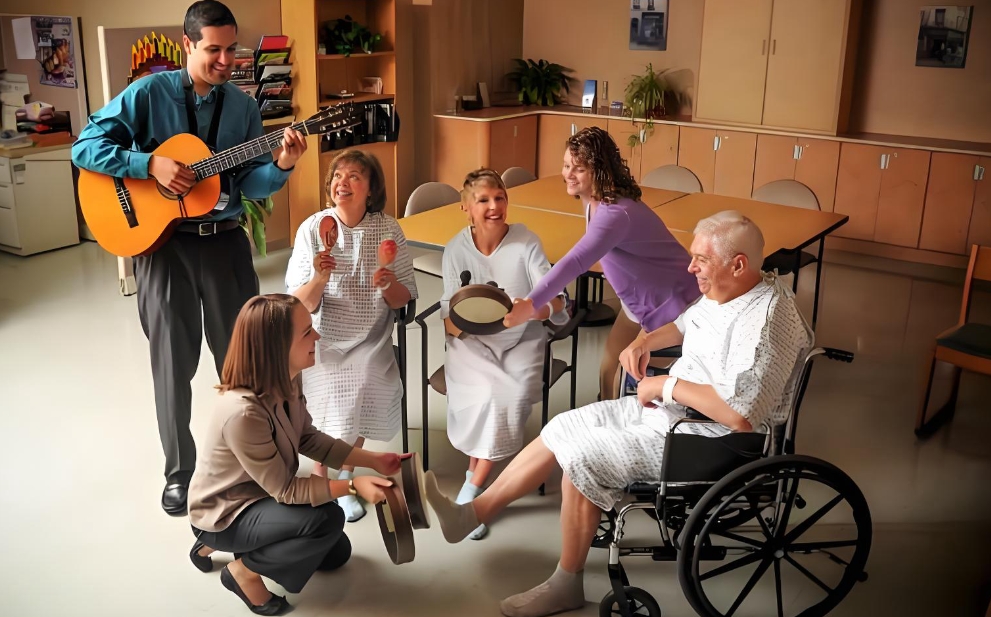
4.Combining Music and Art Therapy for Greater Effect
Integrating music and art therapy can enhance the benefits of each approach. Combining visual and auditory stimulation creates immersive and engaging experiences for dementia patients:
Playing classical or familiar music during painting sessions can enhance creativity and relaxation.
Encouraging patients to create art inspired by the emotions evoked by music.
Group activities such as painting while singing or listening to music can reinforce memory recall and communication.
5.Implementing Music and Art Therapy in Care Settings
Music and art therapy are increasingly integrated into dementia care facilities, hospitals, and home care programs. Caregivers and family members can also introduce these therapies at home to provide comfort and engagement.
Tips for Caregivers:
Identify preferences: Learn the patient’s favorite songs, colors, or artistic styles.
Create a safe space: Provide a quiet, organized environment for artistic expression and music listening.
Encourage participation: Offer gentle guidance, allowing personal expression without pressure.
Observe and adapt: Adjust activities based on the patient’s mood, energy, and interests.
Incorporate daily routines: Regular use of music and art can provide structure and comfort.
6.The Future of Music and Art Therapy in Dementia Care
As awareness of creative therapies grows, more dementia care professionals are incorporating them into treatment plans. Advances such as virtual reality music experiences and AI-assisted art therapy may further enhance their effectiveness.
Ongoing research continues to explore the long-term benefits of music and art therapy, aiming to develop personalized, evidence-based approaches to dementia care.
Conclusion
Music and art therapy offer non-invasive, effective methods to improve the well-being of dementia patients. By stimulating memory, enhancing communication, and enabling emotional expression, these therapies provide holistic support for managing dementia symptoms. Whether through a familiar song or a simple painting activity, creative expression helps patients reconnect with their past, express themselves, and experience joy in the present. With continued development, music and art therapy hold significant potential to improve the lives of dementia patients while supporting caregivers and families.